




menu

Emergency Carbon Monoxide Leak Detection in Los Angeles – Same-Day Response Available 24/7

Get professional CO leak inspection within hours when you smell gas, hear beeping alarms, or experience unexplained headaches. A Plus HVAC Los Angeles dispatches certified technicians equipped with calibrated detection equipment to protect your family from this invisible threat.

Slider Image 1
Slider Image 2
Slider Image 3
Slider Image 4
Slider Image 5
Slider Image 7
Slider Image 8
Slider Image 9
Slider Image 10
Slider Image 11

Carbon Monoxide Is Colorless, Odorless, and Deadly in Los Angeles Homes

You cannot see carbon monoxide. You cannot smell it. By the time symptoms appear, you are already in danger.

Los Angeles homes face unique CO risks due to older housing stock in neighborhoods like Silver Lake and Echo Park, where aging furnaces and water heaters operate in poorly ventilated utility closets. Many structures built before 1978 lack modern venting standards. Add in the tendency to seal homes tightly during summer heat to maximize air conditioning efficiency, and you create the perfect conditions for CO accumulation.

If your carbon monoxide detector is chirping, if family members complain of flu-like symptoms that improve when they leave the house, or if you notice soot buildup around appliances, you need emergency carbon monoxide testing immediately. This is not a wait-until-Monday situation.

Carbon monoxide binds to hemoglobin in your blood 200 times more effectively than oxygen. At 400 parts per million, you have two hours before life-threatening symptoms begin. At 800 ppm, you have 45 minutes before you lose consciousness. Pets and children succumb faster due to their higher respiratory rates.

Professional CO leak inspection involves calibrated electronic sensors that measure concentrations in parts per million. Visual inspections and a nose test will not protect you. You need urgent carbon monoxide check services from technicians trained to trace leaks to their source, whether that is a cracked heat exchanger, disconnected flue pipe, or backdrafting water heater.

Every hour you delay increases the risk. CO gas detection service is not optional when warning signs appear.

Carbon Monoxide Is Colorless, Odorless, and Deadly in Los Angeles Homes
How A Plus HVAC Los Angeles Performs Carbon Monoxide Leak Testing

How A Plus HVAC Los Angeles Performs Carbon Monoxide Leak Testing

We do not guess. We measure.

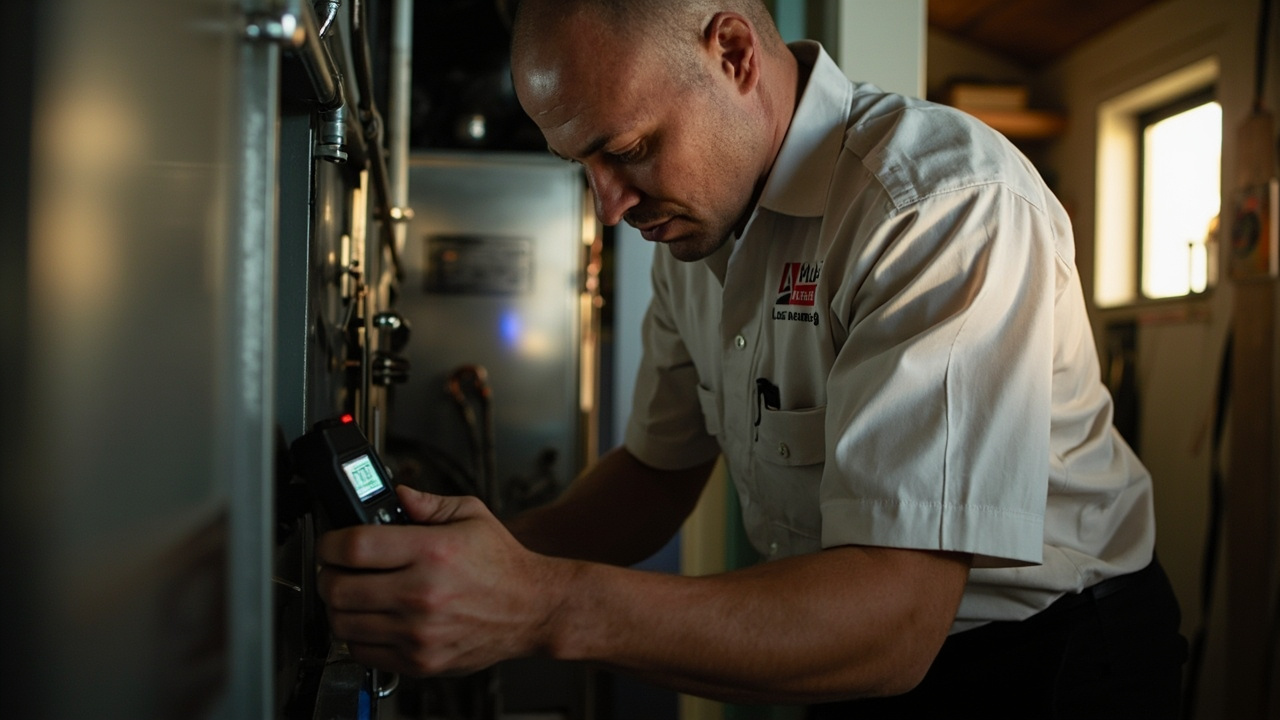
Our technicians arrive with multi-gas analyzers calibrated to detect carbon monoxide down to 1 ppm. We begin with ambient air readings in living spaces, bedrooms, and utility areas to establish baseline levels. Safe homes register 0-9 ppm. Anything above 9 ppm triggers immediate investigation.

We then move to appliance testing. Every gas furnace, water heater, wall heater, and fireplace gets individual analysis. We measure CO in flue gases, which should read below 100 ppm in properly functioning equipment. We check draft pressure to confirm combustion byproducts vent outside rather than spilling into living spaces. Negative draft or spillage means carbon monoxide is entering your home instead of exiting through the chimney.

Heat exchanger inspection follows. Cracks as thin as a hairline can leak deadly gas into your ductwork and circulate it throughout your home. We use inspection cameras and pressure tests to identify compromised exchangers that visual inspection might miss.

Ventilation analysis is critical in Los Angeles homes with retrofit central air systems. Many older homes had wall heaters or floor furnaces replaced with modern HVAC without proper combustion air provision. Tightly sealed homes starve appliances of oxygen, leading to incomplete combustion and elevated CO production.

We also inspect the condition of vent connectors, checking for rust, separation, or improper pitch that allows exhaust gases to leak at joints. We verify clearances to combustibles and confirm that vent terminations are not blocked by bird nests, debris, or landscaping installed too close to exhaust outlets.

You receive a written report with ppm readings from each location and appliance, photos of any defects, and a prioritized repair list.

What Happens During Your Emergency CO Inspection

Emergency Carbon Monoxide Leak Detection in Los Angeles – Same-Day Response Available 24/7
01

Immediate Safety Assessment

Our technician measures ambient CO levels in every room the moment we arrive. If concentrations exceed safe thresholds, we evacuate occupants and shut down gas appliances immediately. We open windows to ventilate the space and contact the gas company if readings indicate an active leak. Your safety is the first priority before any diagnostic work begins.
02

Source Identification

Once the space is safe, we test each gas-burning appliance individually using combustion analyzers. We measure flue gas CO levels, check draft pressure, inspect heat exchangers for cracks, and examine venting systems for blockages or leaks. We trace elevated readings back to the exact component causing the problem, whether that is a malfunctioning burner, corroded vent pipe, or inadequate combustion air supply.
03

Repair and Verification

After identifying the source, we explain the problem and the fix required. Repairs may involve replacing a cracked heat exchanger, resealing vent connections, or adjusting burner combustion. Once repairs are complete, we retest to confirm CO levels have dropped to safe ranges. We provide written documentation of all readings and work performed, giving you proof your home is safe.

Why Los Angeles Residents Trust A Plus HVAC for CO Emergencies

Carbon monoxide emergencies require technicians who understand the specific challenges of Los Angeles housing stock.

We work daily in homes built between the 1920s and today, from Craftsman bungalows in Pasadena to mid-century ranches in the San Fernando Valley to modern builds in downtown lofts. Each era presents different venting configurations and appliance types. We know where problems hide in older homes and how retrofit installations in newer construction can create combustion air issues.

Los Angeles operates under California mechanical code, which has stricter requirements for combustion appliance venting than many states. We stay current on local amendments and ensure every repair meets or exceeds code. This matters because insurance claims and home sales can be jeopardized by non-compliant work.

Our response time averages under two hours for emergency carbon monoxide testing calls within city limits. We stock common repair parts on every truck so fixes happen the same day whenever possible. Waiting days for parts means more nights sleeping in a potentially dangerous home.

We also understand that CO emergencies are terrifying. You receive clear explanations in plain language, not technical jargon meant to upsell unnecessary services. We show you the readings, explain what they mean, and outline your options. If your equipment is unsafe, we tell you why and show you the evidence.

Our technicians complete continuing education on carbon monoxide detection and mitigation every year. This is specialized knowledge beyond basic HVAC training. We invest in the best detection equipment and maintain calibration schedules to ensure accuracy.

When your family's safety is at stake, you need a company with the experience, equipment, and local knowledge to solve the problem right the first time.

What You Can Expect From Our CO Leak Detection Service

Same-Day Emergency Availability

Carbon monoxide does not wait for business hours. We dispatch technicians 24 hours a day, seven days a week, 365 days a year. Emergency calls receive priority scheduling. You will have a technician on-site within two hours for most Los Angeles locations, often faster during daytime hours. We do not make you wait until tomorrow when your family is at risk tonight. Night and weekend emergency service is available at all times.

Comprehensive Testing and Documentation

You receive a full written report documenting CO levels in every room and at every appliance. We include photos of any defects found and explain what each reading means. Testing includes ambient air measurements, appliance combustion analysis, draft testing, heat exchanger inspection, and vent system evaluation. You get a clear explanation of any problems discovered and the specific repairs needed to restore safety. This documentation is valuable for insurance claims and provides peace of mind.

Expert Repairs Done Right

Once we identify the CO source, we provide repair options with transparent pricing. Common fixes include replacing cracked heat exchangers, repairing or replacing damaged vent pipes, adjusting burner settings, or improving combustion air supply. We carry parts for most residential HVAC equipment and complete repairs the same day whenever possible. All work meets California mechanical code requirements. We retest after repairs to verify CO levels have dropped to safe ranges before we leave your home.

Follow-Up Testing and Prevention

After emergency repairs, we recommend annual CO testing as part of regular HVAC maintenance. Carbon monoxide problems develop gradually as equipment ages. Heat exchangers crack from thermal stress. Vent pipes corrode. Burners drift out of adjustment. Annual testing catches problems before they become emergencies. We also provide guidance on detector placement, symptoms to watch for, and when to call for help. Prevention is always better than emergency response.

Frequently Asked Questions

You Have Questions,
We Have Answers

How do you know if carbon monoxide is leaking? +

You cannot see, smell, or taste carbon monoxide. Install CO detectors on every floor of your home, especially near sleeping areas. If your detector alarms, evacuate immediately and call 911. Physical symptoms include sudden headaches, dizziness, nausea, confusion, or flu-like symptoms that improve when you leave the house. Check for warning signs like yellow or orange flames on gas appliances (should be blue), soot buildup, or excessive condensation on windows. In Los Angeles homes with older furnaces or water heaters, annual HVAC inspections catch leaks before they become dangerous. Never ignore symptoms or detector alarms.

What's the most common household thing to cause a carbon monoxide leak? +

Gas furnaces cause most residential carbon monoxide leaks in Los Angeles homes. Cracked heat exchangers, blocked vents, or improper combustion allow CO to escape into living spaces instead of venting outside. Older furnaces (15+ years) face higher risk due to metal fatigue and corrosion. Other common sources include gas water heaters with blocked flues, poorly maintained gas ranges, and portable generators used indoors during power outages. Many Los Angeles properties have original HVAC equipment from the 1990s or earlier. Schedule annual furnace inspections before winter to identify cracks or ventilation problems before they produce dangerous CO levels.

What are two warning signs of carbon monoxide in a house? +

First, watch for physical symptoms that appear suddenly and affect multiple household members: headaches, dizziness, nausea, confusion, or fatigue. These symptoms improve when you leave the building but return when you come back. Second, notice appliance performance changes. Gas furnaces or water heaters producing yellow or orange flames instead of steady blue flames indicate incomplete combustion, which creates carbon monoxide. You might see excessive soot around appliances or moisture condensing on cold windows even in dry Los Angeles weather. Your CO detector alarming is the definitive warning sign. Evacuate immediately, call 911, and get fresh air. Do not re-enter until professionals clear your home.

Can you test carbon monoxide with your phone? +

No reliable phone app detects carbon monoxide. Your phone lacks the specialized electrochemical sensor required to measure CO levels. Some Bluetooth-connected CO detectors send alerts to your phone, but the physical detector does the actual sensing. Apps claiming to detect CO through your camera or microphone are scams and dangerous. In an emergency, you need dedicated UL-listed carbon monoxide detectors with battery backup. Los Angeles building codes require CO detectors in all residential units with fuel-burning appliances or attached garages. Invest in quality detectors for each floor and near bedrooms. Your phone helps by calling 911 if your detector alarms.

How long can you live in a house with a carbon monoxide leak? +

This depends on concentration levels, and you should never wait to find out. At 400 ppm, you face life-threatening symptoms within three hours. At 800 ppm, you lose consciousness in 45 minutes and die within two to three hours. At 1,600 ppm, you collapse in 20 minutes and die within one hour. Lower concentrations (50-100 ppm) cause symptoms over days or weeks. If your CO detector alarms or anyone shows symptoms, evacuate immediately and call 911. Los Angeles fire departments respond to CO emergencies 24/7. Do not re-enter your home until HVAC professionals identify and fix the source. Time matters in CO poisoning situations.

How quickly do you feel the effects of carbon monoxide poisoning? +

Effects depend on concentration. At low levels (50-70 ppm), you may feel mild headaches or nausea after six to eight hours of exposure. At moderate levels (150-200 ppm), symptoms appear within one to two hours. At dangerous levels (400+ ppm), you experience severe symptoms within 30 minutes and lose consciousness within one to two hours. Children, elderly residents, and people with heart conditions feel effects faster. Many Los Angeles residents mistake early CO poisoning for flu or heat exhaustion during summer months when furnaces cycle less. If symptoms appear suddenly and affect multiple people, evacuate and call 911 immediately.

What can falsely set off a carbon monoxide detector? +

Hydrogen gas from overcharged batteries, high humidity near bathrooms or kitchens, and cleaning products containing methylene chloride can trigger false alarms. Detectors placed too close to fuel-burning appliances may react to normal combustion byproducts during startup. Dusty or dirty sensors malfunction over time. In Los Angeles homes, paint fumes or strong solvents during renovations sometimes cause false readings. Detectors older than seven years lose sensitivity and alarm erratically. Never ignore an alarm assuming it is false. Evacuate, ventilate, and call professionals. Replace detectors every five to seven years. If false alarms persist after cleaning and battery replacement, install a new detector in a different location.

How long does it take for a stove to be on to cause carbon monoxide poisoning? +

A properly functioning gas stove should not produce dangerous CO levels during normal cooking. Problems occur when burners malfunction, flames burn yellow instead of blue, or you use the stove to heat your home. Running a gas oven with the door open for heat creates CO buildup within hours, especially in smaller Los Angeles apartments with limited ventilation. Never use cooking appliances for heating. If you smell gas, see yellow flames, or experience headaches while cooking, open windows, turn off the stove, and call a gas technician. Annual appliance inspections ensure proper combustion. Install a CO detector within 10 feet of your kitchen for early warning.

How can I test for CO in my home? +

Install UL-listed carbon monoxide detectors on every floor and near sleeping areas. Test detectors monthly using the test button and replace batteries twice yearly. For immediate testing, call Los Angeles Fire Department non-emergency line to request a CO reading if you suspect a leak but have no detector. Licensed HVAC technicians use calibrated electronic sensors during furnace inspections to measure CO levels at appliance exhaust and throughout your home. These professional tests cost less than emergency room visits. Annual HVAC maintenance includes combustion analysis and CO testing. If you experience symptoms, evacuate and call 911 first. Firefighters carry detection equipment and arrive within minutes in Los Angeles.

What gas is known as the silent killer? +

Carbon monoxide earns the name silent killer because you cannot detect it without equipment. It has no color, odor, or taste. CO poisoning symptoms mimic common illnesses like flu, making diagnosis difficult without high suspicion. The gas displaces oxygen in your bloodstream, causing brain damage or death before you recognize the danger. Los Angeles sees dozens of CO poisoning cases yearly, many in homes without working detectors. Unlike natural gas (which utility companies odorize with mercaptan), carbon monoxide provides zero sensory warning. Only working CO detectors and regular HVAC maintenance protect your family. Install detectors today and schedule annual furnace inspections before winter heating season.

Why Los Angeles's Older Housing Stock Increases Carbon Monoxide Risk

Los Angeles has one of the oldest housing inventories in California, with thousands of homes built before modern venting standards existed. Neighborhoods like Highland Park, West Adams, and Angelino Heights contain homes from the 1900s through 1940s with original heating equipment or poorly executed retrofits. Many of these structures have wall heaters or floor furnaces that vent through single-wall metal pipes, which corrode over time in coastal moisture. When homeowners add central air conditioning, contractors often install new furnaces without adequate combustion air provision, creating negative pressure that pulls exhaust gases back into living spaces. This combination of aging equipment and retrofit installations makes professional CO leak inspection essential.

A Plus HVAC Los Angeles has been serving the greater Los Angeles metro for years, giving our technicians deep familiarity with local housing types and common failure points. We understand how post-1994 earthquake retrofits sometimes compromised venting systems and how energy efficiency upgrades can inadvertently create combustion air problems. Our technicians recognize the difference between original installations and improper modifications, which matters when determining whether equipment meets current code. When you need urgent carbon monoxide check services, local expertise means faster diagnosis and safer outcomes. We know this city's homes because we work in them every day.
HVAC Services in The Los Angeles Area

Want to know if we service your neighborhood? Use the map below to see our local coverage. A Plus proudly serves Los Angeles and nearby communities with fast response times and top-tier HVAC expertise. Whether you're downtown or in the suburbs, we're just a call away. Our mobile team is equipped to reach you quickly and solve your HVAC issues efficiently. Don’t hesitate to reach out—comfort and reliability are closer than you think.

Address:
A Plus HVAC Los Angeles, 1901 Ave of the Stars, Los Angeles, CA, 90067

Additional Services We Offer

Our news updates

Latest Articles & News from The Blogs

Sherman Oaks homeowners face a unique set of cooling challenges. The location between the Santa Monica Mountains and the flatlands…

Full AC Replacement Costs for Sherman Oaks Homeowners

Sherman Oaks homeowners face a unique set of cooling challenges. The location between the Santa Monica Mountains and the flatlands…

Switching From Gas to Electric Heating in Miracle Mile (And What It Costs)

Switching From Gas to Electric Heating in Miracle Mile (And What It Costs) Miracle Mile homeowners are moving toward all…

HVAC Strategies for Quiet Home Recording Studios in Toluca Lake

Precision HVAC Solutions for Los Angeles Recording StudiosHome studio owners in Toluca Lake face a unique set of challenges when…

Contact Us

Do not wait if you suspect a carbon monoxide problem. Call A Plus HVAC Los Angeles now at (310) 579-0040 for same-day emergency response. Our technicians are standing by 24/7 with the equipment and expertise to protect your family tonight.