Living in West Hollywood in 2026 presents specific environmental challenges for condo owners. The density of our urban environment means that residential units are often packed tightly together in neighborhoods like the Norma Triangle and West Hollywood West. This proximity makes noise management a significant part of home ownership. If you install a loud air conditioner, you risk disturbing your neighbors and violating local noise ordinances. Finding the quietest AC units for your West Hollywood condo involves more than just checking a box on a spec sheet. It requires a deep understanding of modern inverter technology and local building codes. High efficiency cooling now focuses on silent operation to ensure comfort without creating a nuisance in shared living spaces.
Modern air conditioning systems have advanced significantly by the current year of 2026. Manufacturers now prioritize sound dampening materials and variable speed compressors that eliminate the loud start and stop cycles of the past. For residents living near the Sunset Strip or the Melrose District, the ambient noise of the city is already high. You do not want to add to that with a vibrating compressor on your balcony. Choosing a system with a low decibel rating is the first step toward a peaceful home. This guide explains the technical differences between top brands and how to ensure your installation meets the strict standards of the City of West Hollywood.

The Science of Decibels and Noise Impact on Condos
The decibel rating is the standard measurement for sound intensity. When you look at new air conditioning units, you will see ratings ranging from 19 decibels for indoor handlers to over 70 decibels for traditional outdoor compressors. In a quiet neighborhood like West Hollywood Heights, a unit running at 75 decibels will sound like a loud vacuum cleaner to your neighbor. This level of noise is often enough to trigger a complaint to the Homeowners Association or the city code enforcement office. Modern premium units aim for an outdoor sound level between 48 and 56 decibels. This range is comparable to a quiet office or a soft rainfall. It is discreet enough to blend into the background noise of the city without being noticed.
Sound perception is also influenced by the frequency of the noise. High pitched whirring or low frequency vibrations can be more annoying than a steady hum. Most high end units in 2026 use acoustic engineering to shift these sounds into frequencies that are less noticeable to the human ear. We use sound pressure data to determine where to place your unit. If a unit is placed in a corner with two hard walls, the sound will reflect and amplify. We recommend placing units on open areas of the balcony or using sound absorbing materials to mitigate this effect. Understanding these technical nuances is essential for any condo AC installation project.
Table 1 Understanding System Noise Levels
| System Type | Average Sound Level | Residential Impact |
|---|---|---|
| Old School Single Stage | 73 to 79 dB | Frequent neighbor complaints and HOA violations |
| Standard Two Stage | 66 to 72 dB | Noticeable when cycling on and off |
| Modern Inverter Unit | 45 to 58 dB | Quiet enough for night operation on balconies |
| Premium Indoor Air Handler | 19 to 25 dB | Nearly silent operation inside the bedroom |
Mitsubishi P-Series and M-Series Performance in 2026
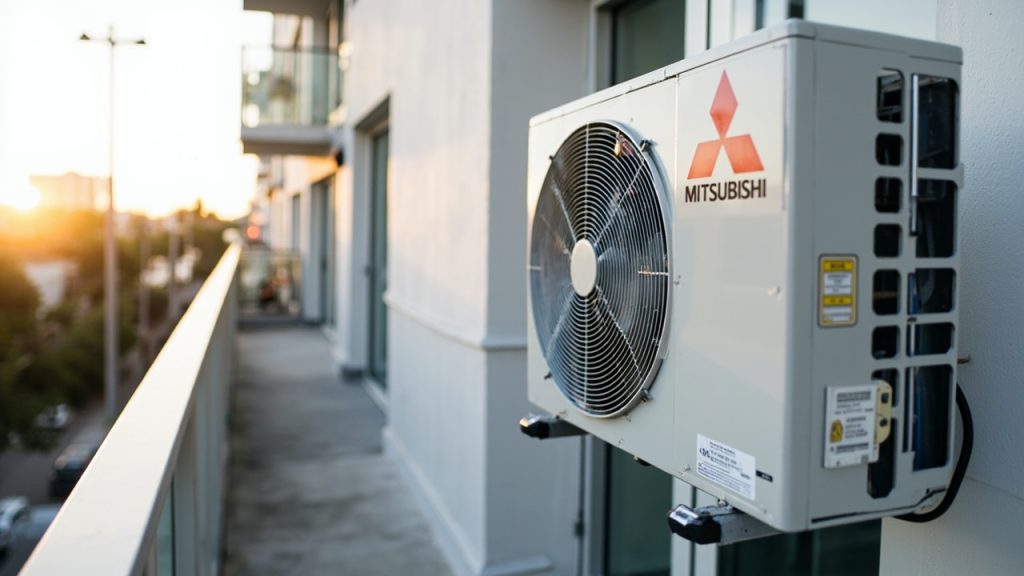
Mitsubishi Electric is a top choice for West Hollywood residents because of their focus on silent operation. Their 2026 lineup features the P-Series and M-Series systems which utilize advanced V-PAM Inverter technology. This tech allows the compressor to adjust its speed in tiny increments. Traditional systems are either fully on or fully off, which creates a loud surge of electricity and sound every time they start. The Mitsubishi inverter starts slowly and stays at a low speed to maintain the temperature. This eliminates the loud thud often heard when an old compressor kicks in. You can learn more about these specific models on the Mitsubishi Electric website.
Another technical feature is the Dual Barrier Coating on the internal fans. In the West Hollywood climate, dust and pollutants can build up on the fan blades over time. This buildup causes the fan to become unbalanced, leading to vibration and noise. The Mitsubishi coating prevents this accumulation. This ensures that the unit stays as quiet as the day it was installed. For owners of luxury units in the West Hollywood North area, this long term performance is a major selling point. The use of a Linear Expansion Valve also helps by regulating refrigerant flow without the clicking or gurgling sounds found in cheaper models. These systems provide the silent cooling necessary for high density living.

Daikin Fit and the Swing Compressor Advantage
Daikin has become a preferred brand for West Hollywood condos due to the compact side discharge design of the Daikin Fit system. Traditional units blow air out of the top, which requires several feet of clearance. The Daikin Fit blows air out of the side, making it perfect for narrow balconies or recessed mechanical closets. The heart of its quiet operation is the Swing Compressor. Unlike rotary compressors that have a sliding vane, the swing compressor uses a single part that rotates smoothly. This design significantly reduces friction and vibration. It is one of the quietest compressor designs available in 2026.
Daikin also incorporates aero-acoustic fan blades. These blades have a specific curvature that allows them to move large volumes of air without creating turbulence. Since air turbulence is a primary source of noise, this feature is vital for keeping decibel levels low. If you live in a building with strict rules on outdoor equipment, the Daikin Fit is often the easiest system to get approved by an HOA. It also features a specialized night mode that can be programmed through the Daikin One+ smart thermostat. This mode further reduces the fan speed during late hours to ensure you remain in compliance with the local West Hollywood noise ordinance.
Critical Technical Installation Tactics for Noise Reduction
Even the most expensive unit will be loud if the installation is handled poorly. Proper installation is the key to achieving the lowest possible noise profile. Our team uses several specific methods to ensure your new system is silent. We focus on isolation and dampening to prevent sound from traveling through the building structure. These are the technical steps we take for every West Hollywood installation.
- We install high density rubber and cork vibration isolation pads under every outdoor unit to prevent floor vibration.
- We use custom fit acoustic compressor blankets that wrap the motor to muffle mechanical sounds.
- We secure refrigerant lines with cushioned riser clamps to prevent the pipes from rattling against the walls.
- We install line set silencers to smooth out the flow of refrigerant and eliminate hissing sounds.
- We perform a deep vacuum pull to 500 microns to ensure no air or moisture is in the system, which prevents compressor strain and noise.
- We use spring loaded mounting brackets for units that must be attached to the exterior walls of the building.
By following these steps, we ensure that the mechanical noise stays within the unit and does not vibrate into your neighbor’s unit. This is especially important in older mid-century buildings in the Tri-West and Center City areas where soundproofing between units may be limited. If you are planning a renovation, it is important to schedule a professional consultation to discuss these technical requirements early in the process.
West Hollywood Permitting and Noise Code Compliance
Every AC installation in West Hollywood requires a mechanical permit. This is handled by the West Hollywood Planning and Development Services Department located at 8300 Santa Monica Boulevard. The city is very strict about noise levels. According to the West Hollywood Municipal Code Chapter 9.08, mechanical equipment must not exceed specific sound limits at the property line. For a condo owner, the property line is the wall shared with your neighbor. If your unit exceeds these limits, the city can order you to stop using it or remove it entirely.
When we apply for a permit, we must provide the manufacturer specifications for the sound power levels of the unit. We also submit a site plan showing the exact distance from the unit to the nearest window or balcony. This ensures that the installation is legal from day one. Failing to get a permit can lead to complications if you ever decide to sell your condo. Buyers in 2026 are very diligent about checking for unpermitted work. We handle the entire permitting process for our clients to ensure everything is done correctly and according to the 2026 California Building Code. You can find more information about these rules on the City of West Hollywood official website.
Table 2 Comparing Standard vs Premium Quiet Systems
| Feature | Standard Single Stage System | Premium Inverter System |
|---|---|---|
| Compressor Speed | Fixed at 100 percent | Variable from 20 to 100 percent |
| Startup Noise | Loud surge and vibration | Soft start with no surge |
| Airflow Sound | Consistently loud | Whisper quiet at low speeds |
| Neighborhood Impact | High risk of complaints | Minimal to zero impact |
| Energy Efficiency | Lower SEER2 ratings | Highest available SEER2 ratings |
Managing Acoustics in Different Condo Architectural Styles
The architectural style of your building changes how sound travels. West Hollywood has a diverse mix of buildings. In older properties from the 1960s and 1970s, the balconies are often made of solid concrete. This material is great for weight but it is a hard surface that reflects sound. For these buildings, we often suggest adding a decorative sound screen around the unit. This screen must be designed to allow for proper airflow while absorbing some of the acoustic energy. This prevents the sound from bouncing into the unit above you.
In newer glass towers near the Sunset Strip, the challenge is often the lack of space. Many of these buildings use a centralized HVAC closet. While the walls of the closet help contain the noise, the vibration can travel through the floor. In these cases, we focus on the static pressure of the ductwork. If the ducts are too small for the air volume, you will hear a loud whistling sound at the vents. We use airflow diagnostics to ensure the system is balanced. This prevents the annoying air noise that can keep you awake at night. Each building requires a custom approach based on these acoustic factors.
The Importance of Professional Load Calculations
One of the most common causes of noise is an oversized air conditioner. If a unit is too large for the space, it will reach the target temperature too quickly and turn off. Then it will turn back on just a few minutes later. This constant cycling is loud and puts a lot of stress on the compressor. In a West Hollywood condo, the cooling load is influenced by several factors including the direction your windows face and the floor you are on. A top floor unit with south facing windows will have a much higher load than a ground floor unit facing north.
We perform a Manual J load calculation for every project. This involves measuring every room and accounting for the insulation and window types. This ensures we install a unit that is perfectly sized. A properly sized inverter unit will run for longer periods at a very low speed. This is the key to silent operation. It maintains a constant temperature while the fan and compressor are barely audible. This technical precision is what separates a professional installation from a generic one. If you want to ensure your home stays cool and quiet, you should always start with an accurate load calculation.
Long Term Maintenance to Sustain Quiet Operation
Your air conditioner will only stay quiet if it is well maintained. Over the course of a year, the outdoor unit is exposed to the elements. Dust from the street and leaves from nearby trees can get caught in the coils. This forces the fan to work harder, which increases the noise level. We recommend a seasonal maintenance plan to keep your system in peak condition. During a maintenance visit, we clean the coils and check the balance of the fan blades. Even a small amount of dirt can cause a blade to wobble, creating a rhythmic thumping sound.
We also check the refrigerant levels using a digital manifold. If the system is low on refrigerant, the compressor will run hotter and louder. This can eventually lead to mechanical failure. By keeping the system charged and clean, we ensure it operates at the lowest possible decibel level. We also inspect the electrical components to ensure everything is tight. Loose wires or vibrating panels are common sources of noise that are easily fixed during a routine check. Taking care of your system is the best way to stay in the good graces of your neighbors and your HOA.
Selecting the Best Brand for Your Silent Home
Choosing between Mitsubishi and Daikin often comes down to the specific layout of your condo. Both brands offer the quietest units on the market in 2026. If you have an existing ducted system and limited balcony space, the Daikin Fit is usually the best choice. It integrates well with traditional ductwork and offers exceptional sound ratings. If you are looking to cool a specific room or do not have ductwork, a Mitsubishi ductless mini split is often the better option. These units are incredibly efficient and the indoor handlers are so quiet that you might forget they are running.
We help you navigate these choices by looking at the technical requirements of your building. We also consider the aesthetics of the installation. In many West Hollywood condos, the unit is visible from the street or the courtyard. We want to ensure the installation looks as good as it performs. We offer several options for concealing the units while maintaining the necessary airflow for quiet operation. Our goal is to provide a complete solution that includes the equipment, the permits, and the professional installation techniques required for a silent home.
If you are ready to upgrade your cooling system and want to find the quietest AC units for your West Hollywood condo, contact us today. We have the experience needed to handle the specific challenges of our local neighborhoods. Whether you are in the Eastside or near the Pacific Design Center, we can design a system that keeps you comfortable and keeps your neighbors happy. Reach out for a full assessment of your condo and let us help you achieve the quietest indoor environment possible in 2026.
Ready to experience a silent and cool home? Contact our West Hollywood HVAC experts today for a detailed estimate and system design.
{
“@context”: “https://schema.org”,
“@type”: “BlogPosting”,
“headline”: “Finding the Quietest AC Units for Your West Hollywood Condo (Noise Solutions for Residents)”,
“description”: “Learn how to select the quietest air conditioning systems for West Hollywood condos in 2026. Expert guide on Mitsubishi, Daikin, and local noise ordinances.”,
“wordCount”: 2443,
“datePublished”: “2026-02-08T09:02:00.000Z”,
“dateModified”: “2026-02-08T09:02:00.000Z”,
“inLanguage”: “en-US”,
“mainEntityOfPage”: {
“@type”: “WebPage”,
“@id”: “https://aplushvaclosangeles.com”
},
“publisher”: {
“@type”: “LocalBusiness”,
“name”: “A Plus HVAC Los Angeles”,
“url”: “https://aplushvaclosangeles.com”
},
“author”: {
“@type”: “Organization”,
“name”: “A Plus HVAC Los Angeles”,
“url”: “https://aplushvaclosangeles.com”
},
“image”: {
“@type”: “ImageObject”,
“url”: “https://aplushvaclosangeles.com/wp-content/uploads/2026/03/finding-the-quietest-ac-units-for-your-west-hollyw-1.jpg”
}
}
{
“@context”: “https://schema.org”,
“@type”: “HVACBusiness”,
“name”: “A Plus HVAC Los Angeles”,
“url”: “https://aplushvaclosangeles.com”,
“address”: {
“@type”: “PostalAddress”,
“addressLocality”: “Los Angeles”
},
“areaServed”: {
“@type”: “City”,
“name”: “Los Angeles”
}
}
{
“@context”: “https://schema.org”,
“@type”: “BreadcrumbList”,
“itemListElement”: [
{
“@type”: “ListItem”,
“position”: 1,
“name”: “Home”,
“item”: “https://aplushvaclosangeles.com”
},
{
“@type”: “ListItem”,
“position”: 2,
“name”: “Blog”,
“item”: “https://aplushvaclosangeles.com/blog”
},
{
“@type”: “ListItem”,
“position”: 3,
“name”: “Finding the Quietest AC Units for Your West Hollywood Condo (Noise Solutions for Residents)”
}
]
}
{
“@context”: “https://schema.org”,
“@type”: “Service”,
“serviceType”: “HVAC”,
“provider”: {
“@type”: “LocalBusiness”,
“name”: “A Plus HVAC Los Angeles”,
“url”: “https://aplushvaclosangeles.com”
},
“areaServed”: {
“@type”: “City”,
“name”: “Los Angeles”
},
“description”: “Learn how to select the quietest air conditioning systems for West Hollywood condos in 2026. Expert guide on Mitsubishi, Daikin, and local noise ordinances.”
}
